
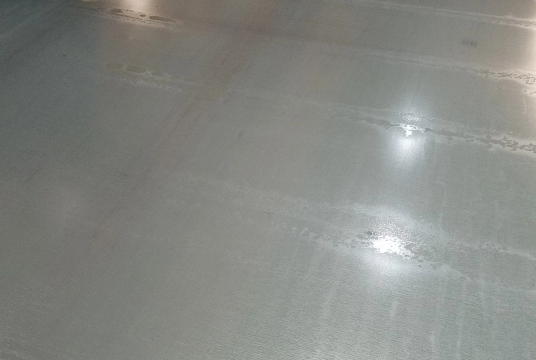
Reel breaks are raised bumps or kinks that go across the width of a steel coil or plate. If present, they are usually at the very OD/ID (depending on processing) of the coil, but if severe, they can continue for several laps into the body of the coil.


Reel breaks are a consequence of coiling steel. At a hot strip mill, when the head of the strip reaches the downcoiler, there are wrapper rolls that hold the strip against the mandrel until the coil cinches and creates tension. Usually, the wrapper rolls are only engaged for a few laps. As the very head end of the strip rotates around the mandrel, it creates a “kink” on the adjacent lap, and if the kink is large enough or if there is enough pressure from the wrapper rolls, this kink can go through several laps.
Some mills use technology to pull the wrapper rolls away from the strip (or “jump”) as the head end of the coil rotates around. This alleviates the stress on the sequential laps and lessens the likelihood of reel breaks.
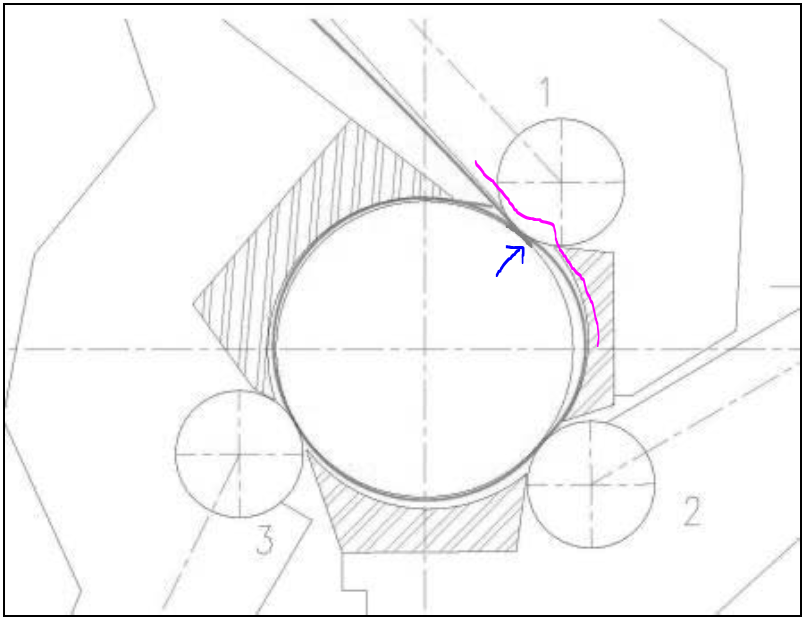
Downcoiler illustration courtesy of Jose M. de Jesus, Xtek, Inc.
Reel breaks can also be created during downstream processing; any coil-to-coil line has the capability to create them. Heavy gauges and soft grades are particularly susceptible.
To avoid reel breaks, severe edges should be minimized – the closer to a perfect circle the first lap is, the better. Pulling with too much tension should also be avoided.
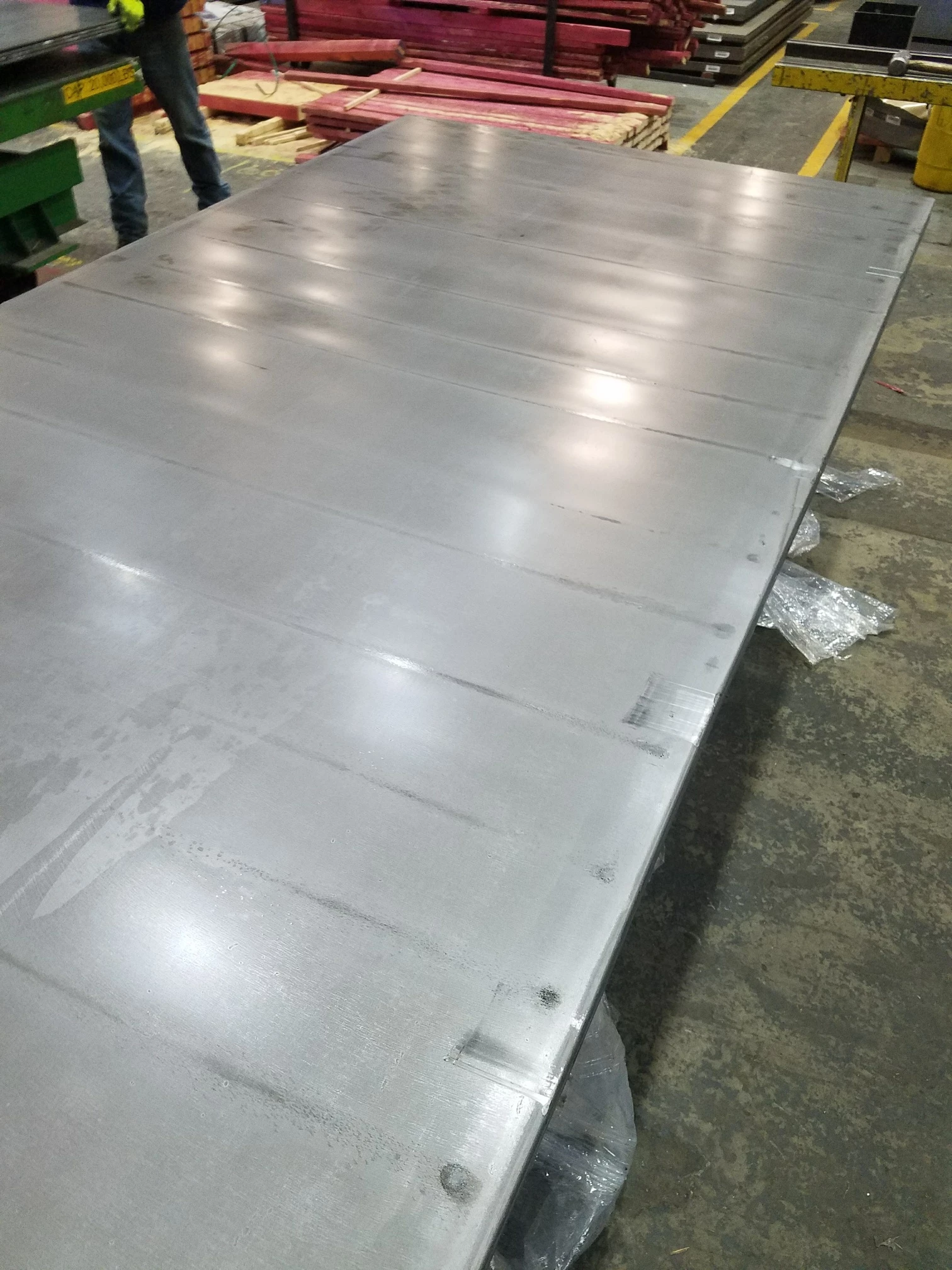
Reel breaks may look similar to a defect called “coil breaks.” Coil breaks also go across the width of the coil, but they tend to be focused on the crown of the coil and trail off near the edges. Coil breaks are also much more likely to affect an entire coil, and have an almost wrinkled appearance. For more information on coil breaks, see the Processing Defects page.