Lightweighting – Going Beyond Automotive
Lighweighting is a term that you’re likely familiar with when it comes to the automotive industry. Manufacturers rely on high strength low alloy (HSLA) steel to reduce the weight of parts without sacrificing strength. In fact, by doubling the strength of the material, they can reduce the weight of a part by 1/3.
But what about other industries? For those of you looking to gain a better understanding whether HSLA will work for your applications, consider some key benefits.
HSLA steel has a tensile strength ranging from 40 to 100 ksi. Its increased strength means that you can use thinner material that weighs less — but can do more.
For heavy equipment, HSLA provides increased payload capacity. When a structure is lighter, it can allocate more structural capacity to carrying cargo rather than supporting its own weight.
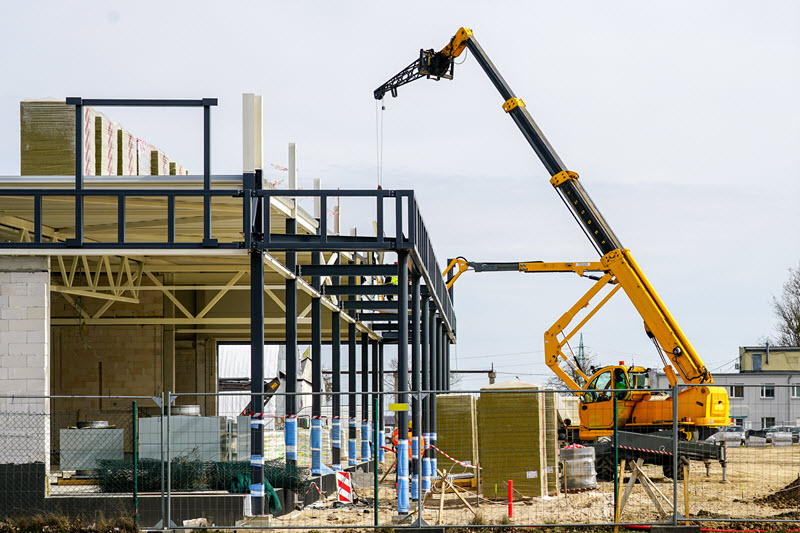
Grade 100 steel, for example, can be used for telehandler booms, making it possible to carry and place heavier materials. The same holds true for excavator booms, so that they can dig, lift and maneuver heavier loads and it allows tractor trailers and flatbed trailers to carry more.
Agricultural equipment that runs on diesel fuel is also a good candidate for HSLA. Having lighter chassis allows for a larger fuel tank, so farmers can spend more time in the field and increase their productivity.
Electric lifting equipment can also benefit from HSLA steel, since the batteries and electric motors weigh more than a diesel engine. HSLA reduces the weight of the chassis while still providing the necessary strength.

Most any industry — from construction to agriculture and mining — is keen to improve the performance of its equipment and HSLA supports that goal. Reducing the weight of components also reduces stress on them, so equipment lasts longer. Better performing and more durable equipment can improve customer satisfaction and improve your position in the marketplace.
HSLA also provides sustainability benefits, which are important in many industries. By reducing equipment weight by 10%, it’s possible to improve fuel efficiency by 6 to 8%, and also lower emissions. This is particularly helpful for working trucks, where HSLA can be used for frame parts like flanges, bumpers and chassis.
But lightweighting with HSLA isn’t limited to just heavy equipment, trailers or working trucks. It can also be used in for infrastructure projects, such as bridge building. With longer spans, HSLA can provide higher strength and reduce the amount of concrete and other components needed to support the bridge. Contractors can also use this steel for erecting buildings. In both of these infrastructure applications, and others that require transporting HSLA to a job site, there is the added benefit of saving on transportation costs. More material can be moved on the same truck while using less fuel.
Interested in learning more about HSLA?
Reach out to our steel experts to discuss if it’s the right choice for you.