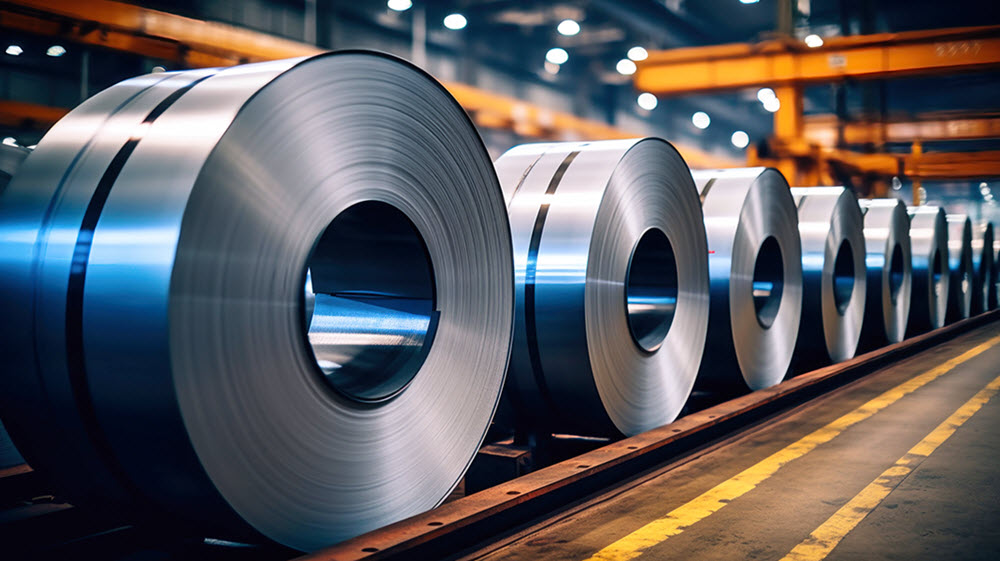
Steel has evolved alongside a modern world that demands increasingly exceptional performance from the historic alloy.
The automotive industry, a driver of steel development, showcases this well. Cars built today utilize advanced high strength steels (AHSS) grades that can be four times as strong as high strength low alloy (HSLA steel) and ten times as strong as carbon steel. Even with this strength, they also weigh less due to being thinner. Lightweighting — or using high strength, lighter steel — isn’t limited to the automotive industry. Fabricated parts in many industries can benefit.
Frequently Asked Questions
1. WHAT ARE AHSS AND HSLA STEEL?
HSLA steels use microalloys and cooling techniques to achieve increased strength levels when compared to plain carbon and basic CQ grades. They are primarily single phase steels, and offer yield strengths starting around 40 ksi. AHSS are usually multi-phase steels with extraordinary properties, such as dual phase, TRIP (transformation induced plasticity), TWIP (twinning induced plasticity), and press hardening steels.
2. WHAT IS THE BENEFIT OF SWITCHING TO A HIGHER STEEL GRADE WITH DECREASED THICKNESS?
Cost reduction is a significant advantage to lightweighting. Due to higher strength levels, thinner AHSS and HSLA steels can be used in place of plain carbon or structural steel grades. Even though high strength steel costs around 10% more per pound, companies are purchasing 30% less weight. That provides a net savings of 20%. In addition, reducing part thickness reduces freight costs, allows for faster thermal cutting and requires fewer weld passes. Another advantage is safety, since workers don’t have to manage extremely heavy parts.
3. WHAT CONSIDERATIONS NEED TO BE MADE FOR SURFACE PREPARATION OF HIGH STRENGTH STEEL?
Steel grades that are less than 100 ksi in strength do not pose any surface preparation concerns. For those above 100 ksi in strength, considerations should be made regarding surface preparation. Shot blasting increases surface hardening, and while the effect is negligible when forming mild and lower-strength HSLA steels, shot blasting can make it more difficult to successfully form grades with yield strengths over 100 ksi. Pickling can cause hydrogen embrittlement in martensitic steels and should be avoided. Brushing is still an option for surface preparation of these higher strength grades of steel.
4. HOW IS FIRST OPERATION BLANKING AFFECTED WITH HIGH STRENGTH STEEL?
Blanking high strength steel requires an abundance of toolroom finesse, particularly as these materials increase in thickness. Thicker high strength steels are prone to shear cracking — an occurrence where the steel fractures or pulls apart. This is the result of the forces exceeding the shear strength of the material and when the shear strength is close to the steel’s tensile strength. It is necessary to manage how much material is being cut and how much is engineered to break during the shearing process, which requires adjusting the clearance between punch and die. Parts may require thermal cutting.
5. IS FORMING DIFFERENT WITH HIGH STRENGTH STEEL?
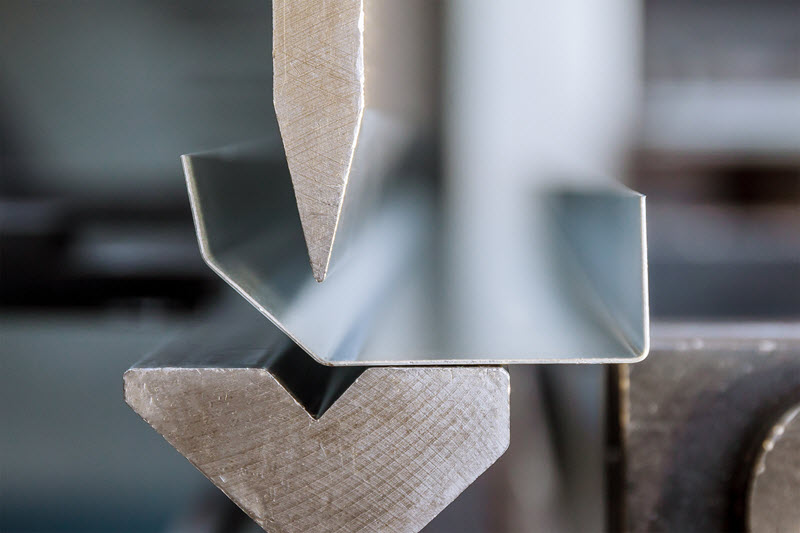
As strength increases, the minimum bend radius increases. High strength steel parts with tight bends may require more generous radii to accomplish successful forming. Increasing yield and tensile strengths can also lead to higher loads on presses and other forming equipment, but for applications such as press brake bending, this is usually offset by the decrease in thickness. However, when it comes to coil-fed stamping press operations, it is conceivable that an AHSS application may require new tooling and potentially a higher tonnage press. AHSS steels are subject to high work hardening rates and complex parts may require roll forming.
6. HOW DOES JOINING HIGH STRENGTH STEELS COMPARE TO OTHER MATERIALS?
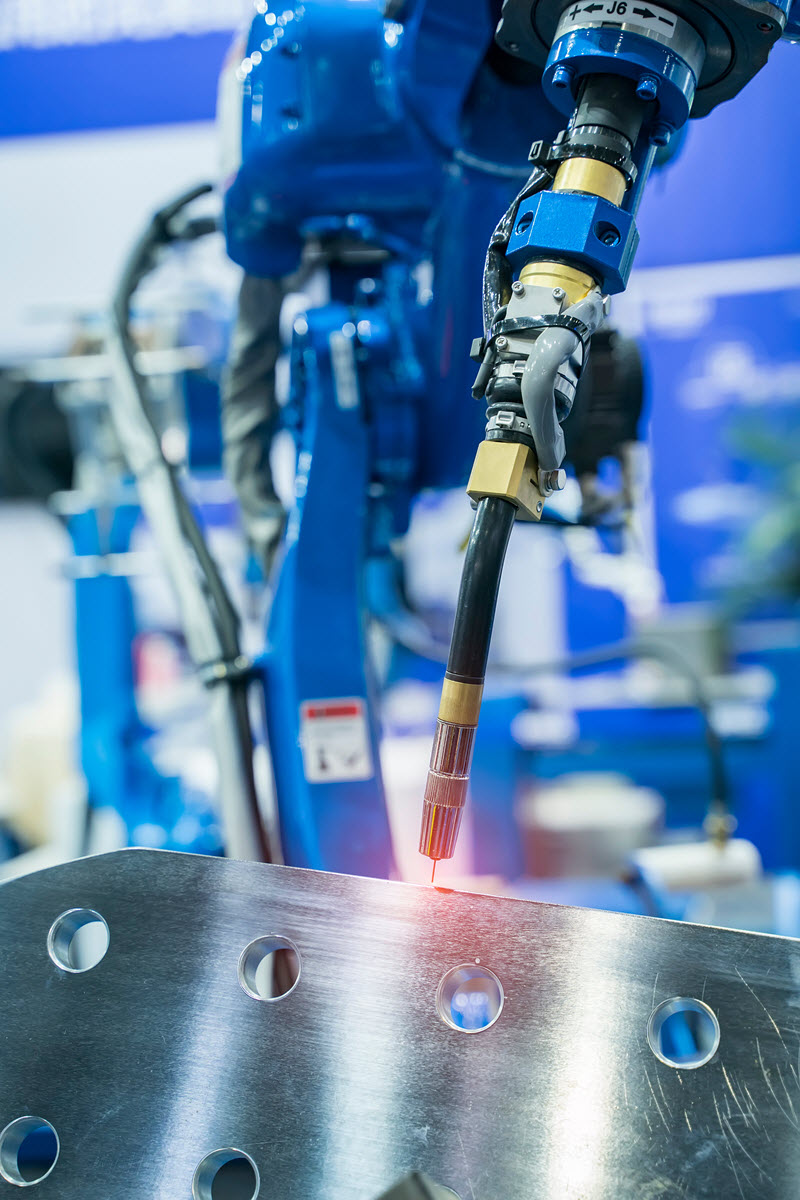
For many lightweighting cases, additional welding parameters will not be required and it can be welded using a MIG process and also robotically welded. The same shielding gases can be used as for high strength steels as for mild steel. When welding AHSS grades, specifically, a few adjustments may be required compared to using mild steel welding parameters. These include adjusting electrode force and weld time. Spot welding the same thickness of material requires a lower current.
7. IS IT DIFFICULT TO GET THE DESIRED DIMENSIONS AND EDGE ON HIGH STRENGTH STEEL?
As strength increases, the propensity for springback also increases. This means that parts may require an amount of over-forming to achieve the correct dimensions. Thermally cut parts made from high strength steels may require edge conditioning before complex fabrication. Edge defects from cutting may act as stress concentrators and cause cracking during forming.
8. IS HIGH STRENGTH STEEL STIFFER THAN OTHER MATERIALS?
The elastic modulus of steel changes negligibly across the span of grades. Mild steels, HSLA and AHSS all have a similar stiffness. As such, replacing a thicker, lower-strength part with a thinner, higher-strength part may require the addition of stiffeners to achieve the same function.
For more information, contact STEEL WAREHOUSE at (800) 348-2529 Or Ask an Expert.