Ultra High Strength, Quenched & Tempered Steel Plate From Coil
The shift from discrete plate production to hot-rolled, plate from coil has revolutionized the carbon steel industry, delivering greater efficiency and versatility. Modern plate from coil—up to 1-inch thick—offers a practical, high-performance solution for today’s challenges.
Quenched and tempered steel plate starts as hot-rolled material that undergoes controlled heating and rapid cooling, followed by a tempering cycle. This process produces steel with high strength, consistent toughness, and stable performance in demanding conditions. Steel Warehouse produces quenched and tempered steel plate from coil, allowing customers to source high-strength plate with greater efficiency and coil-based flexibility.
The process follows a few straightforward steps:
1
Heating
The steel reaches a temperature above its critical point. This step aligns the grain structure, so the next stages create predictable results.
2
Quenching
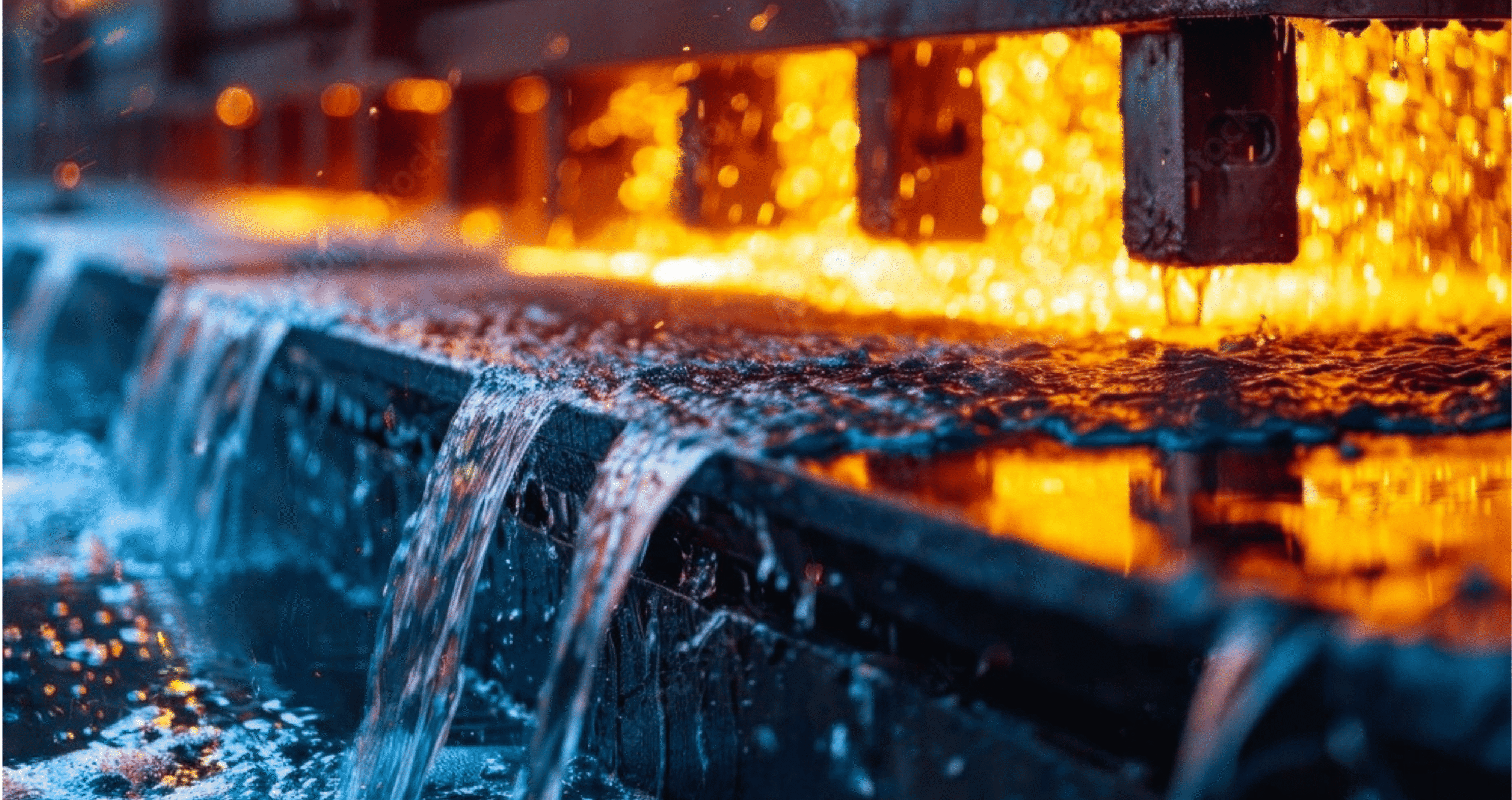
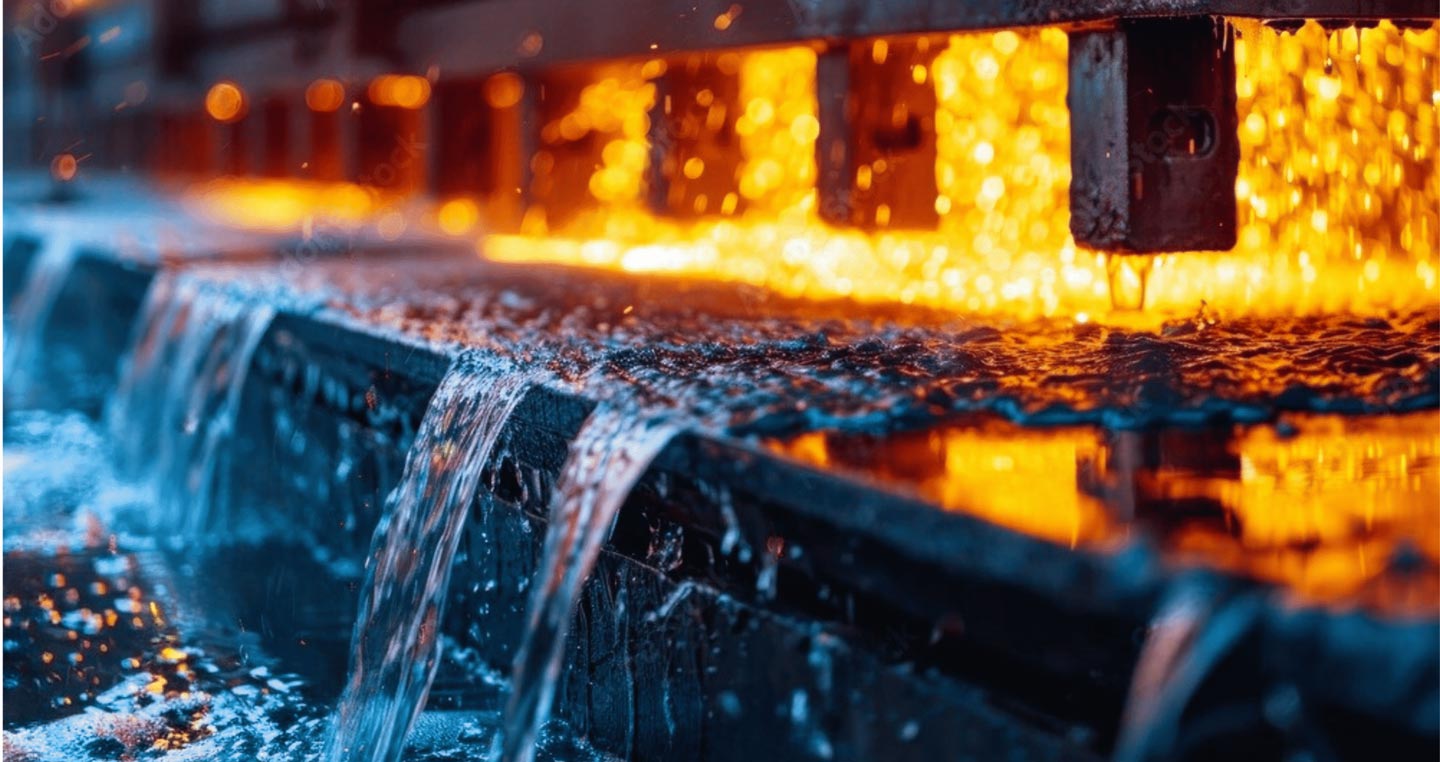
The steel moves through a rapid cooling stage, which locks in a hard, strong microstructure. This step delivers the foundation for the high strength associated with quenched and tempered steel plate.
3
Tempering
The steel heats again at a controlled temperature. This refines hardness, improves ductility, and stabilizes the structure. The tempering step creates a balance between strength and toughness, two essential traits for applications that face impact, abrasion, or heavy loading.
Why This Process Matters
Quenched and tempered steel plate from coil delivers performance that standard hot-rolled plate cannot match. The controlled heat treatment strengthens the material, supports dimensional consistency, and helps the steel maintain its properties through machining, forming, and service in demanding environments.
How It Differs From Standard Plate
Standard hot-rolled plate provides versatility for everyday fabrication. Quenched and tempered steel plate delivers far higher mechanical performance through deliberate heat treatment. This distinction positions Q&T plate as a preferred option for structural components, wear-resistant parts, and assemblies that function under pressure or heavy loads.
What “From Coil” Means for Customers
Steel Warehouse produces quenched and tempered steel plate from coil for larger volumes, consistent flatness, and production efficiency. Coil-based processing also allows tighter dimensional control and shorter lead times compared to discrete mill plate.
Steel Warehouse leads in heavy-gauge, hot-rolled coil processing, offering a broad range of plate from coil, enhanced with Quench & Tempering (Q&T). Our SWQT product line builds on advancements in Automotive Advanced High Strength Steel (AHSS), delivering superior internal cleanliness and reliability for critical applications in automotive, oil and gas, and structural applications.
SWQT Sizing & Services
SWQT Sizing
Thickness Range: 3/16″ to 1″
Standard Widths: 48″, 60″, and 72″
Custom widths up to 81″ available
Mixed custom lengths available.
Expert Metallurgical Support
Our team of experienced metallurgists plays a critical role in developing and optimizing our SWQT product line. From initial material selection to tailored solutions for your specific applications, Steel Warehouse’s metallurgists provide: material recommendations, detailed metallurgical data, and support for fabrication needs.
Processing Services
Full laser and plasma processing available upon request.
Quenched and tempered steel plate delivers mechanical properties that support demanding fabrication and field use. The Q&T process builds these traits throughout the thickness of the plate, giving customers material that performs predictably in high-load, high-impact, or abrasive environments. Steel Warehouse produces quenched and tempered steel plate from coil with consistent structure and tight dimensional control.
Properties include:
Property
specification
High Strength
The quenching stage forms a strong microstructure, and the tempering cycle balances that strength with controlled toughness. Designers often choose quenched and tempered steel plate for components that need high yield strength, high tensile strength, and stable performance under load.
Dimensional Stability
Coil-based Q&T production supports uniform mechanical properties and flatness. This stability helps fabricators machine, cut, and form the plate without unexpected distortion.
Toughness and Impact Resistance
The tempering cycle reduces brittleness and improves the steel’s ability to withstand impact. Customers often rely on these properties in applications exposed to vibration, shock, or variable climate conditions.
Consistent Through-Thickness Performance
Because the Q&T process treats the full cross-section of the steel, customers receive uniform output across the entire plate. This consistency supports accurate design calculations and reliable long-term use.
Hardness and Wear Resistance
Q&T plate offers high hardness levels that perform well in abrasive environments. This helps users extend service life in parts that see scraping, sliding, or heavy surface contact.
Machinability and Formability
Proper tempering keeps the steel workable for cutting, drilling, machining, and bending. Even at high strength levels, the structure accepts these operations without unpredictable behavior.
Industries and Applications
Quenched and tempered steel plate is ideal for projects that demand strength, toughness, and reliable performance under stress. Steel Warehouse supplies quenched and tempered steel plate from coil to customers who need consistent properties for structurally critical or high-wear components.
Typical applications include:
Heavy Equipment
Manufacturers in construction, agriculture, mining, and material handling use Q&T plate for booms, chassis components, buckets, blades, and wear parts. The material’s strength and hardness help equipment handle continuous loading and abrasive working conditions.
Truck and Trailer
Trailer builders, rail manufacturers, and heavy-duty vehicle producers rely on quenched and tempered steel plate for crossmembers, frames, and load-bearing structures. The combination of strength and toughness supports lighter designs without sacrificing durability.
Oil, Gas, and Energy
Producers and fabricators use Q&T plate for equipment that faces pressure, impact, and variable temperatures. Applications include storage tanks, riser systems, pipeline components, brackets, and structural supports.
Industrial Fabrication
Shops that serve construction, machinery, or infrastructure projects turn to quenched and tempered steel plate for formed parts, welded assemblies, wear-resistant liners, and structural components. The material’s uniform properties support precise fabrication and consistent field performance.
Construction and Structural Projects
Engineers specify quenched and tempered steel plate for bridges, building supports, crane structures, and other load-bearing elements. The high strength-to-weight ratio helps these projects meet demanding requirements with efficient designs.
Frequently Asked Questions
What are typical quenched and tempered steel specifications?
Specifications outline the hardness, strength, chemistry, and dimensional requirements a plate must meet. Common specifications referenced for Q&T plate include:
ASTM A514 for high-strength structural applications
ASTM A543 for materials used in pressure vessels
ASTM A517 for alloy plate that serves in heavy-duty environments
Does Quenched and Tempered steel form and machine well?
Yes. The tempering cycle gives the steel enough ductility and stability to support drilling, machining, cutting, and forming. Proper tooling and procedures help customers achieve accurate results.