
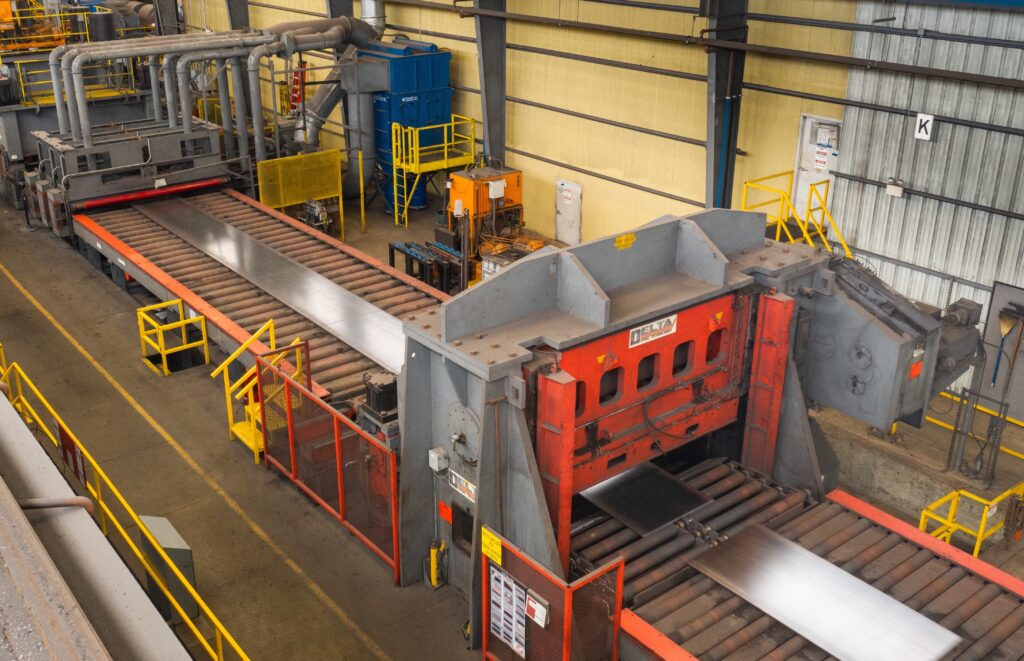
It might seem that the difference in meaning between “steel sheet” versus “steel plate” would be fairly obvious; that there would be a simple thickness standard to differentiate between the two. Not so fast.
Referring to steel as either plate or sheet is not just based upon thickness, but also upon processing parameters as defined by the American Society for Testing and Materials (ASTM). And, if you want to start exploring the vastness of these specifications, you could easily spend days understanding all the standards.
Luckily, you don’t need to do that because that’s what our metallurgists are for. So, let’s stay out of the weeds and get into some very basic understandings.
Is it Sheet or Is it Plate?
Unless we are talking in ASTM-specifics, plate and sheet are often used interchangeably. However, there is some general understanding of thickness parameters. Sheet is typically thinner than plate – some say anything less than 3/16” (.1875”). However, the boundaries vary depending upon the material as defined by the ASTM. We are confident, however, that no one is going around referring to a 1” thick material as a sheet.
From an application standpoint, sheet is a thinner piece of metal that has been cut from continuously rolled coil. It’s often used in applications where weight is a concern, such as transportation — automotive or aerospace. Or, think of thin metal used in appliances or enclosures.
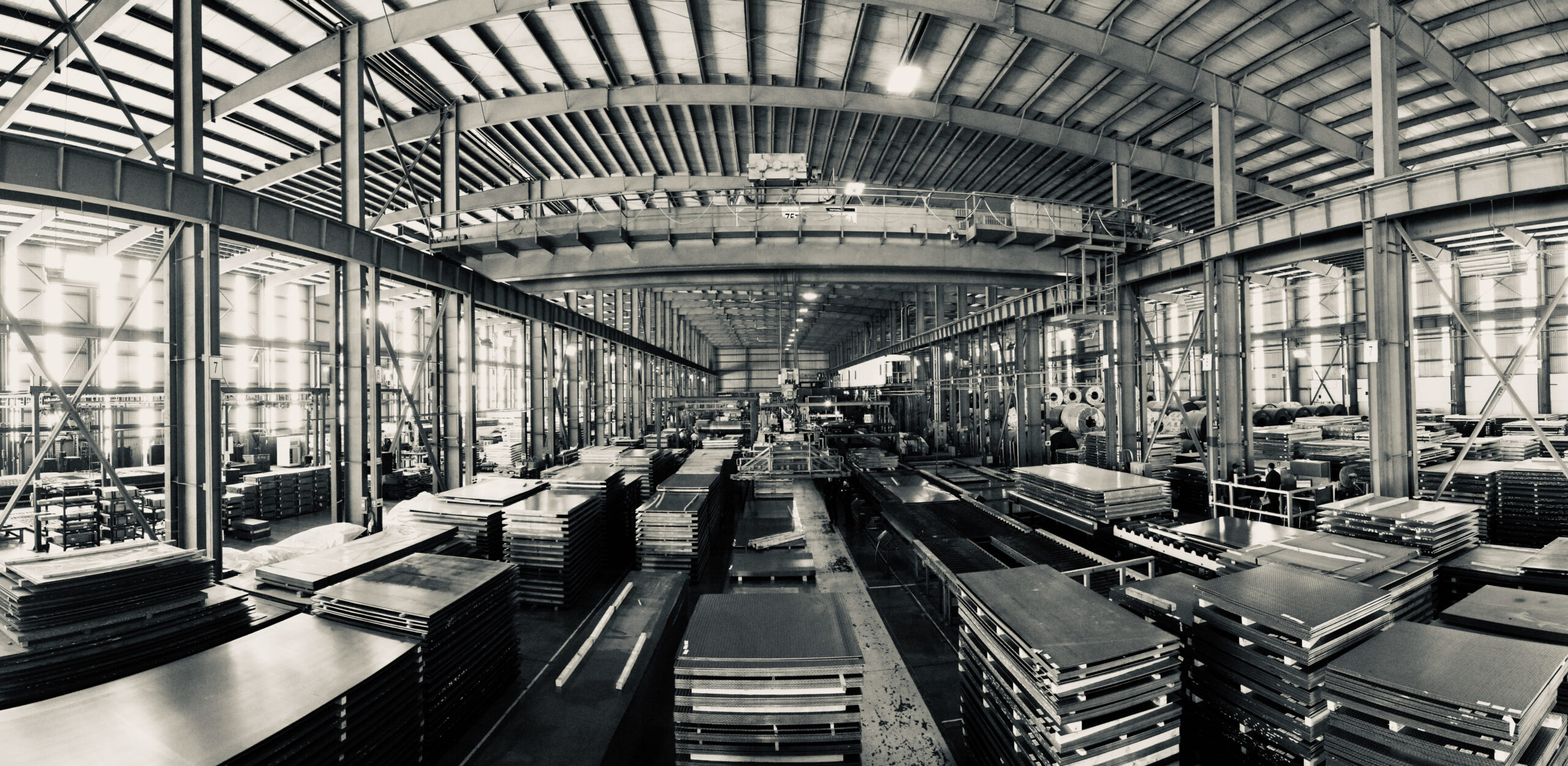
Pictured: Assorted Sheets
Sheet steel comes produced as coils that can be slit to a desired width for further processing or cut-to-length as a metal blank for use in stamping or other forming operations.
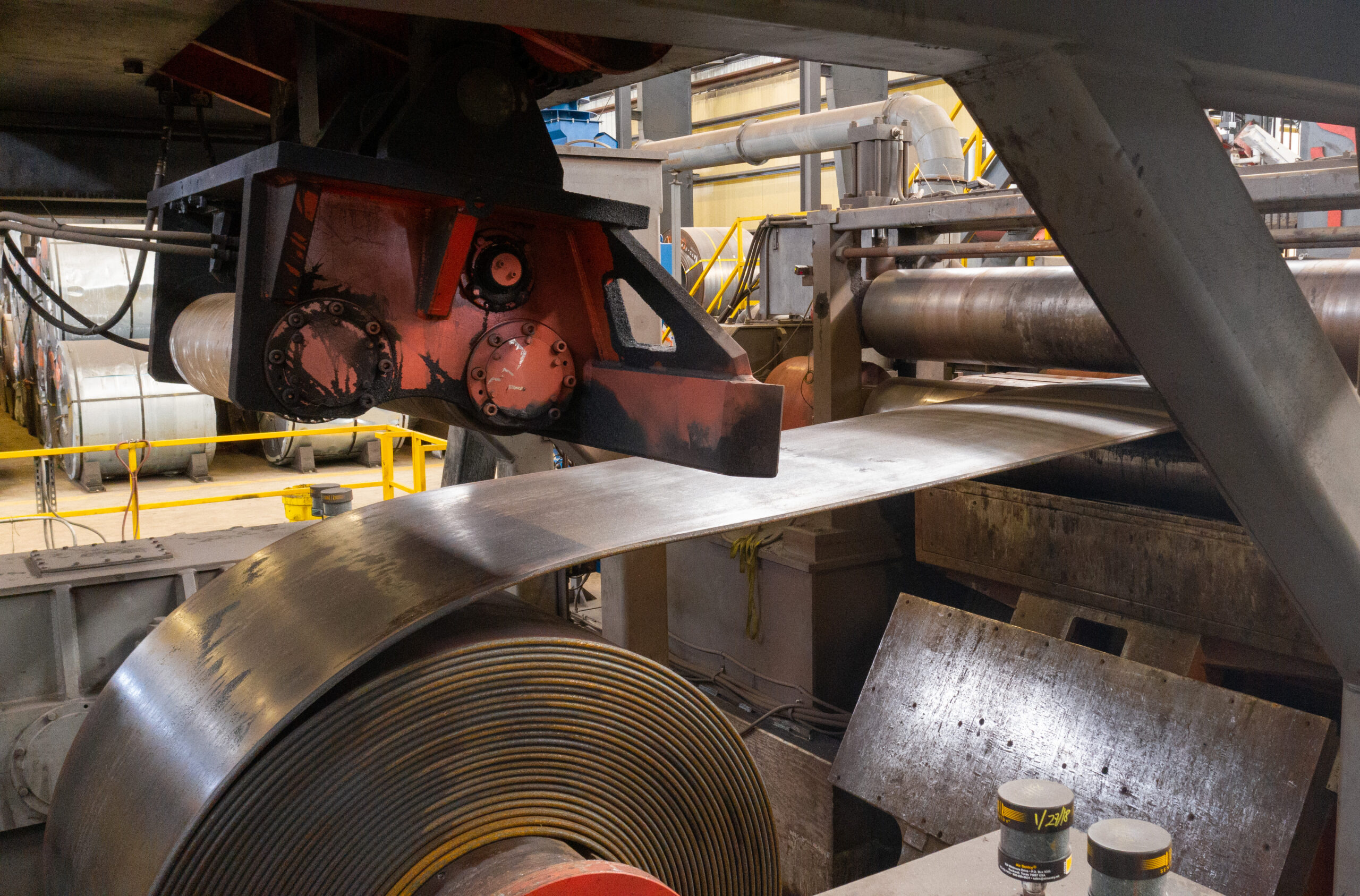
Pictured: Coil fed onto a cut-to-length line to become sheet or plate.
Plate, on the other hand, is thicker and typically used in machines, structural sections and larger fabrications. For instance, consider heavy-duty components, structural beams or large machinery parts.
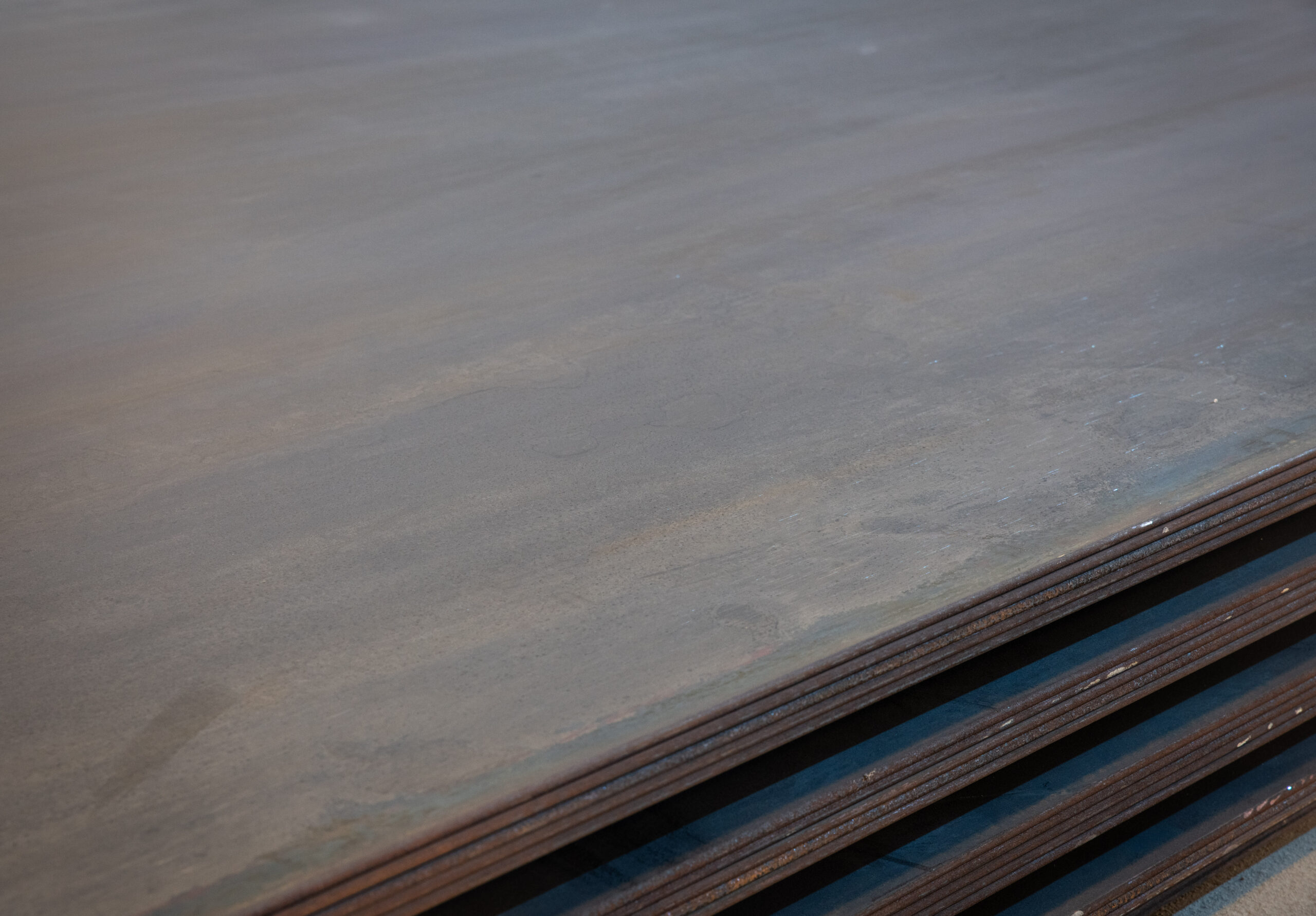
Pictured: Close-up of plate.
In the past, steel plate had been produced (rolled) as a single piece (blank) in pre-determined sizes based upon the mill capability – often referred to as discrete plate. Fabricators had to purchase the closest size for their needs, understanding that there would, undoubtedly, be waste. This is still the most common way that people purchase plate.
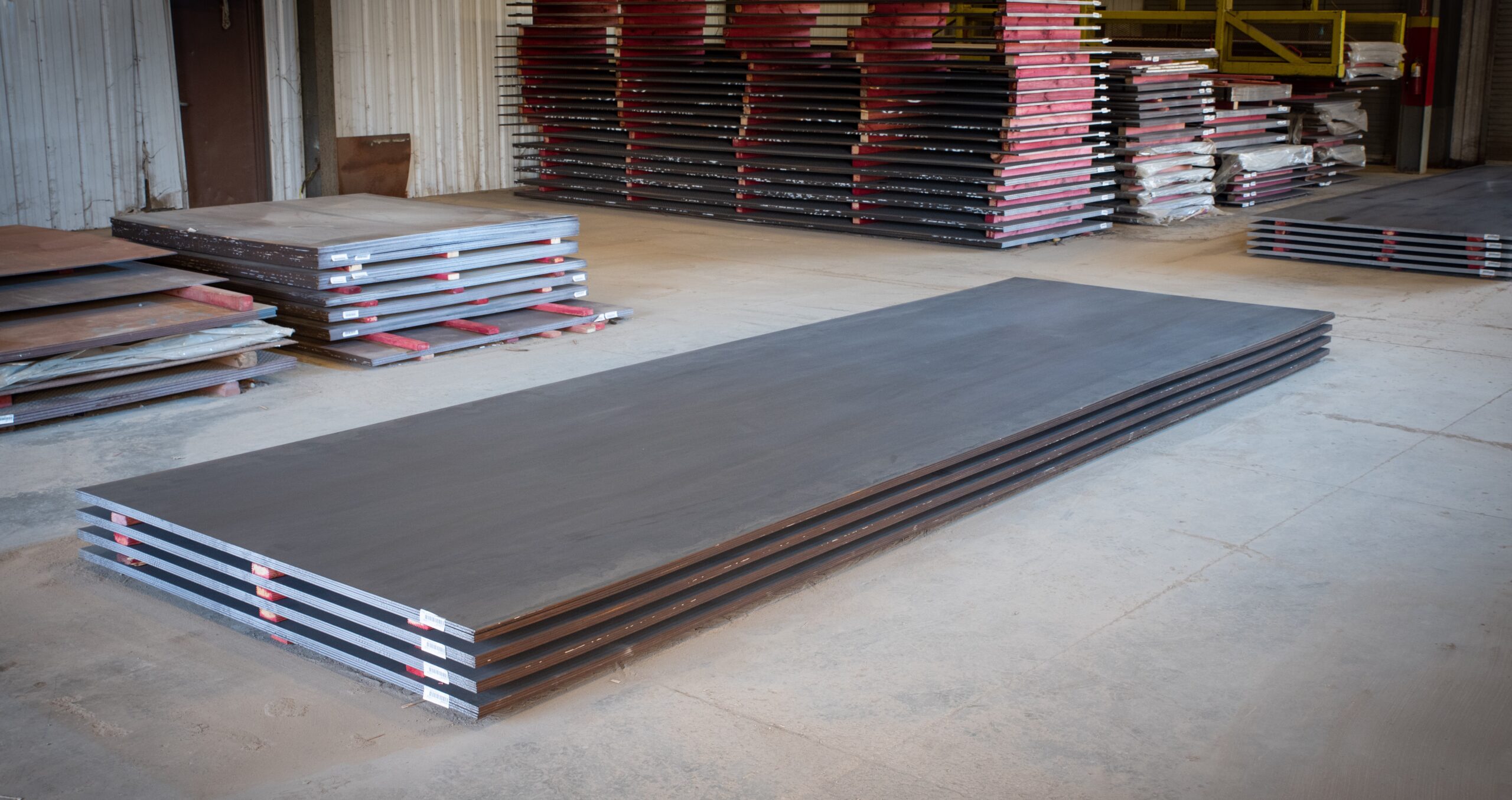
Pictured: Discrete plate.
However, steel plate can also be cut from coil, which can be an advantage in certain situations. For example, at Steel Warehouse, we are able to cut a variety of plate steel from coil in custom lengths in thicknesses up to 1”.
Why one type over the other? It really depends upon your needs and the sizes of material you are looking for. There can be time savings with purchasing plate or sheet cut from coil, as well as cost savings. However, there is no one size fits all.
It’s good to have a choice, and we encourage you to give us a call to let our team figure out the best format for your application.
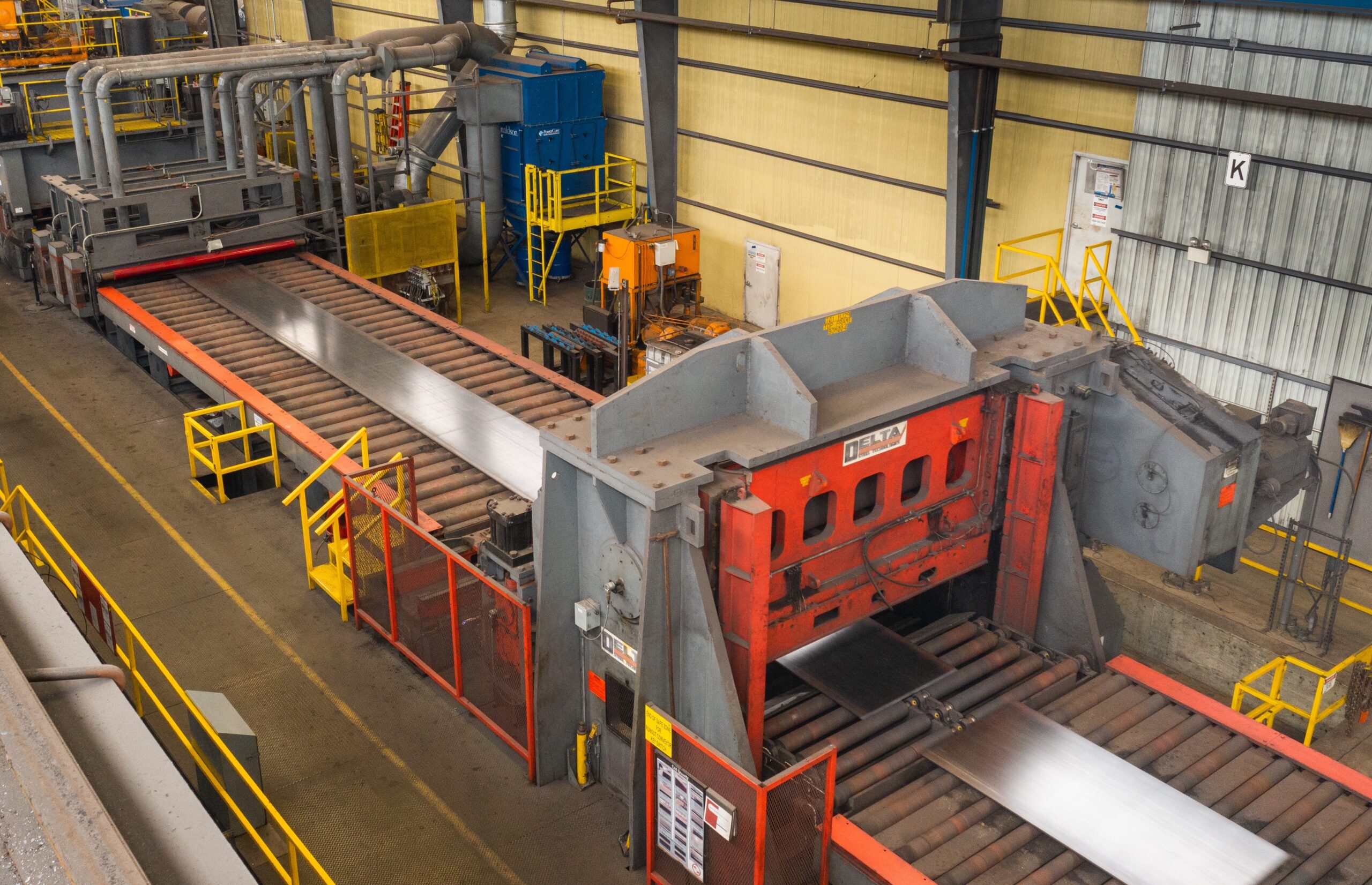
Cut to Length Sheet at Rotary Sheer

Written By:
Mick Gugel
Metallurgist