High Power Lasers Change the Profiling Game
Over the past decade, the laser-cutting market has grown more than 10% annually, outpacing all other profile-cutting processes. Much of this is due to the rapid increase in laser power, which has more than tripled from 15 to 50 Kw in just the past few years. Greater laser power means faster cutting speeds, leading to a substantial reduction of operating costs (including gas usage, cycle time per part, and energy consumption per part) and, importantly, significantly lower cost-per-part.
These advances in laser power have expanded the ability to apply laser cutting to thicker gauge steel, which previously had to be handled by plasma or mechanical stamping – and it can do so faster and with tighter tolerances.
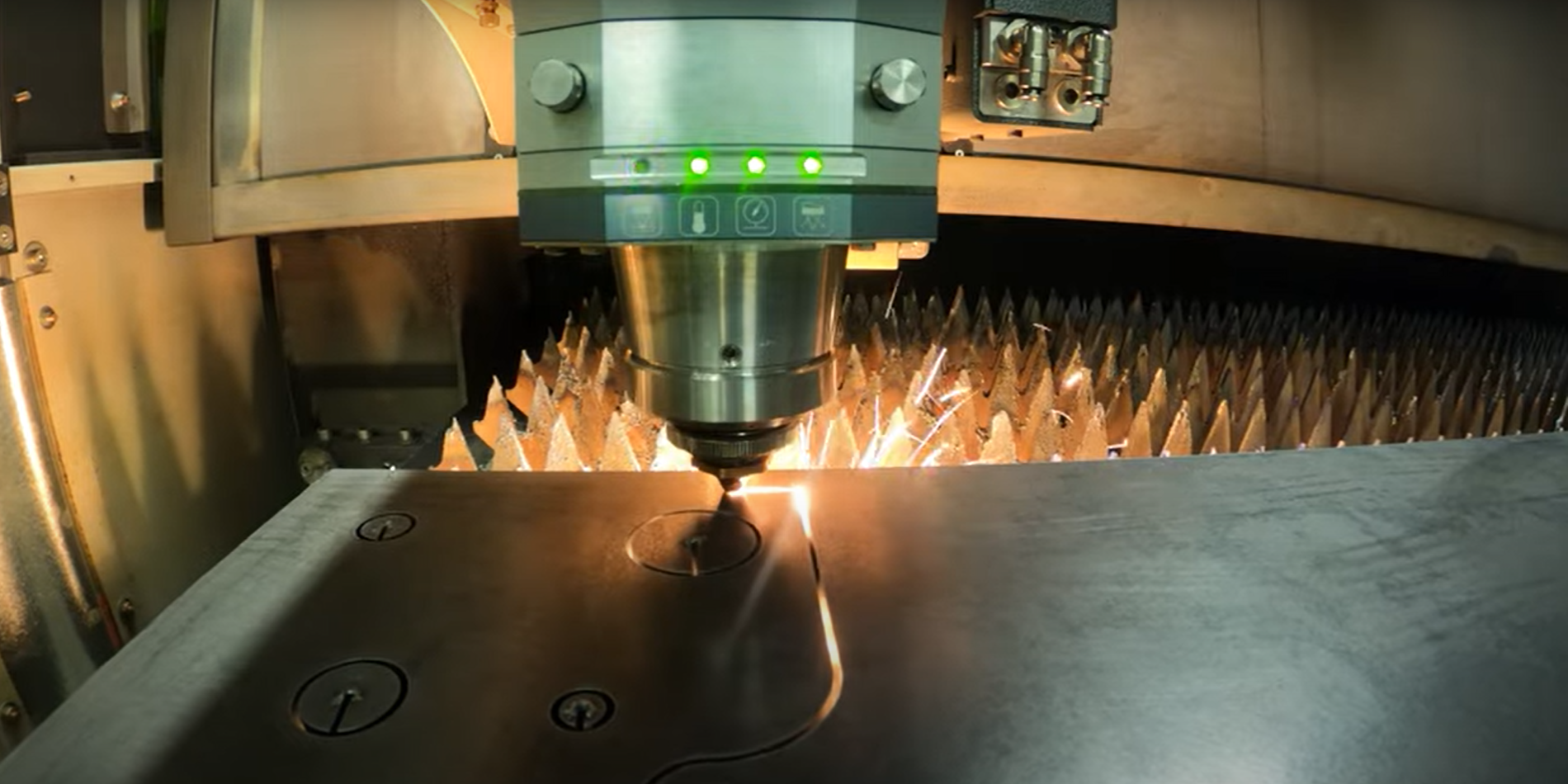
Compared to traditional cutting technologies, high-powered lasers offer unmatched efficiency and speed. The laser beam emitted by these machines is highly concentrated and precise, focusing on a single tiny area that results in a thin cutting seam (kerf) in the workpiece. At the same time, lasers have a lower heat output compared to other cutting technologies, resulting in minimal thermal distortion on the material being cut. All of this allows for faster, cleaner cuts with minimal material waste. This precision also eliminates the need for secondary finishing processes, saving both time and resources.
Additionally, laser technology offers unmatched flexibility in terms of design capabilities. With advanced programming software, intricate designs can be uploaded onto laser machines and executed with the utmost precision. This makes them ideal for complex projects that require intricate cuts.
Leveraging Lasers
Laser-cutting technology constantly evolves, and investing in the latest equipment can be a significant financial burden for businesses. For some companies, outsourcing laser cutting may be a smart alternative, as you gain access to state-of-the-art equipment without having to bear the expense. This ensures that products are cut using the most advanced technology available, resulting in precision cuts and high-quality end products. And, importantly, going with this approach means you’re not paying for scrap, you eliminate secondary operations and reduce overall material handling.
Consider this. You can order 45,000 lbs. of steel material sent to your facility, knowing that approximately 20% of that will become scrap during the laser cutting process. Or, you can order 45,000 lbs. of good laser-cut parts sent to you with no scrap. This not only saves on material but also transportation fees as in the first scenario you’re paying to ship 9,000 lbs. of what will end up as waste at your facility.
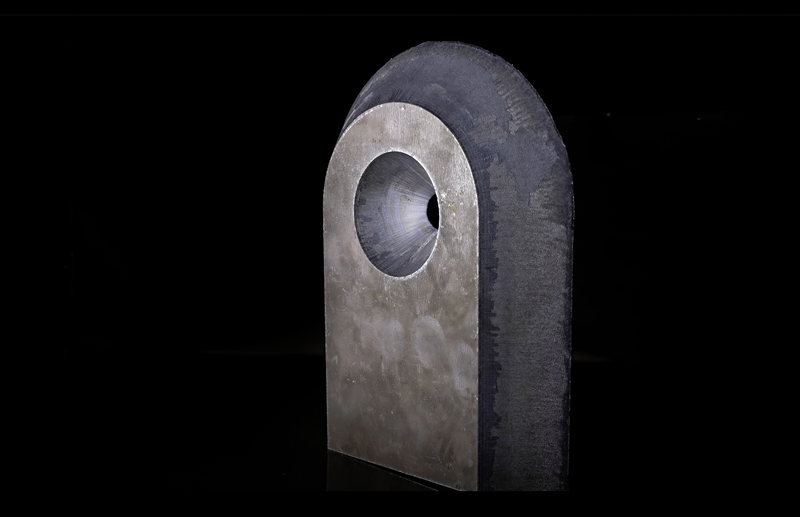
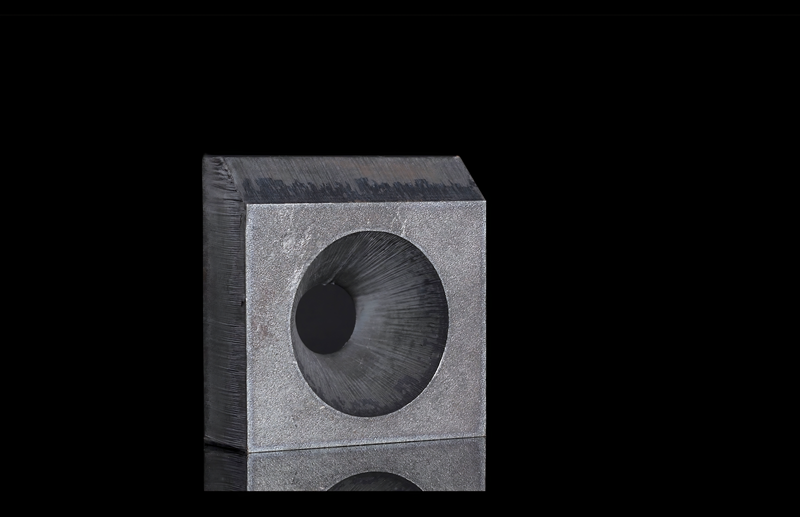
Today’s increased laser powers enable the cutting or piercing of extremely precise holes in even thick gauge steel. As a comparison, typically the smallest hole that plasma cutting can achieve is a 1” diameter in 1” thick steel, while CO2 lasers can cut a diameter of half the thickness, or .500” in this example. However, a high-power laser can cut a hole as small as 1/8”, or potentially even smaller, in a 1” steel sheet.
Additionally, suppose you have a part that requires welding. In that case, laser beveling can be provided as part of the laser cutting service, eliminating the need to grind or mill the edge prior to the welding process. In this way, you reduce material handling and clean inspected parts arrive to your facility ready for secondary processes – whether it be bending, forming, or welding.
Some applications may not require the tolerance of a laser cutter, but as higher speeds enter the market, the enhanced productivity, lower cost-per-part, increased thickness range, and improved quality of thick cutting in metal fabrication will likely make this the technology of choice.
Visit our Laser Cutting page or call our knowledge experts to find out more.